

Acacia gum and sugar reduction
Acacia gum is a versatile ingredient for sugar-reduced and sugar-free food and drinks!
In the food and beverages industry, reducing or eliminating sugar content is a necessity in order to address the health issues faced by the world population. In order to find solutions, the food industry can count on acacia gum, a natural additive and ingredient sourced from the Acacia tree.
Complete the form. You will receive the documentation by email.
(You may not receive it immediatly, it may take a little while)
[weforms id=”2604″]
Alland & Robert may use your contact data to keep you informed of its products and services by email or by phone. You can withdraw your marketing consent at any time by clicking the unsubscribe link in such email or by sending an email to info@allandetrobert.fr.
More information on our processing can be found in our Privacy Notice. By submitting this form, you acknowledge that you have read and understand our Privacy Notice.


New partnership with Indian based company Sayaji
Alland & Robert announces joint venture with Sayaji Industries for acacia gum production in India
April 6, 2019 – Alland & Robert has entered into a joint venture with India-based company Sayaji Industries Limited
As a result of this joint venture, Alland & Robert and Sayaji Industries will each take an equal share (50:50). The partnership is embodied by a brand new name and logo.

Alland & Robert, a family-owned company and expert in this field since 1884, will primarily focus on manufacturing and supplying premium quality spray dried acacia gum for the growing Indian market.
Commenting on the joint venture, Mr. Frédéric Alland, CEO at Alland & Robert said : “This Joint Venture will give Alland & Robert the opportunity to offer its high quality products to the Indian market. Our partnership with a successful local enterprise will get us closer to the customers’ needs of this particular and dynamic new market. Alland & Robert is a 135-year-old family company that has always aimed at expanding its reach in the world. We are proud to take on new challenges to ensure our success.”
Mr. Priyam Mehta, CMD, Sayaji Industries Ltd. said, “We are delighted to join hands with Alland & Robert, a company that has been an expert in this field since 1884. We will leverage the expertise of both companies – Sayaji Industries’ strong presence in the Indian Food & Beverage market and Alland & Robert’s unique technological know-how. We are looking forward to working closely with Alland & Robert on developing this partnership.”
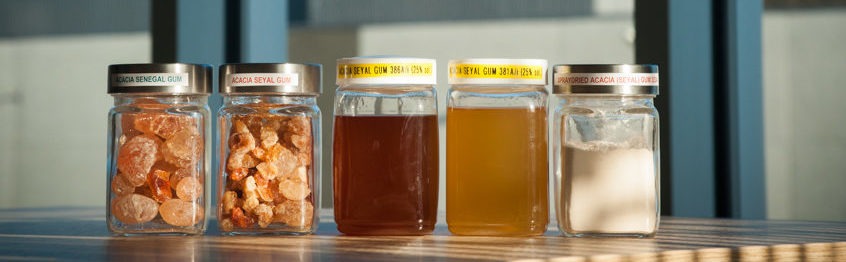
Acacia gum, also known as gum Arabic or E414, is a natural, safe and healthy ingredient used in flavours, beverages, confectionery, dairy, bakery, dietary products, pharma and cosmetics among others. Acacia gum is today found in thousands of day to day products all over the world.
Alland & Robert and Sayaji industries will present their partnership at the Food Ingredients trade show in Mumbai (21-23 October 2019) at the Sayaji Industries booth: A10.
Join our United States roadshow
Join our United States Roadshow!
PRESENTATION BY ALLAND & ROBERT
Gum Acacia: The Versatile Flavor Enhancer
- > Discover the flavor enhancing applications of versatile gum acacia.
- > Get insights on the latest flavor technology.
- > Gain expertise in improving flavor systems.
- > Explore specialty gums to enhance unique flavors.
Alland & Robert presentation will be followed by a presentation by HB Natural Ingredients about stevia, the natural sweetener.
Alland & Robert announces verification by NON-GMO project
Alland & Robert announces verification by NON-GMO project
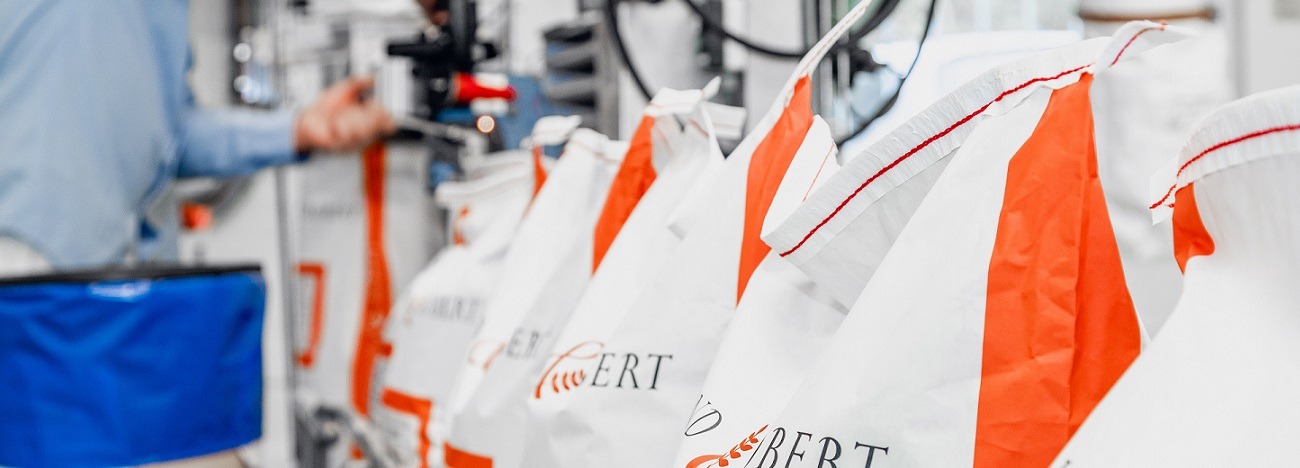
Alland & Robert has obtained NON GMO verification for its acacia gum references, karaya gum reference and its texturing ingredient Syndeo®.
Alland & Robert is proud to announce its Non-GMO Project Verified products are produced in compliance with the Non-GMO Project Standard. This is an important process that confirms Alland & Robert’s commitment to manufacture natural, unadulterated products, and offer the highest quality of gums.
The Non-GMO Project is a US-based non-profit organization committed to preserving and building sources of non-GMO products, educating consumers, and providing verified non-GMO choices. It is North America’s most trusted seal for GMO avoidance for consumers who are concerned about what’s in their food.
Alland & Robert CEO Frédéric Alland said: “This verification by the NON GMO project is step forward for us, and we will continue to promote the use of natural products in the food and cosmetic industries. It will help us provide more transparency to our customers looking for premium and vegetal ingredients.”
15 Alland & Robert references have been verified by the NON-GMO Project, including 13 Acacia Gum qualities. Acacia gum, or E414, is a natural, vegetal and healthy ingredient used in the food and cosmetic industries for its functional properties and a soluble fiber. Acacia gum is today found in thousands of day-to-day products all over the world.
The complete list of verified references can be found here.
Alland & Robert Hosts Press Trip to Show Off Acacia Gum's Multiple Applications
Alland & Robert Hosts Press Trip to Show Off Acacia Gum’s Multiple Applications
On a sunny Monday in mid-December, we were proud to host both journalist Miriam Nice from the prestigious BBC Good Food and foodie influencer Elly Curshen at our R&D centre in Saint-Aubin-sur-Gaillon, France, for a day centered around one of the world’s most useful and up-and-coming ingredients: acacia gum.
Fun Fact: The research centre is brand new and was opened in 2018!
We arrived in Saint-Aubin-sur-Gaillon from our Paris offices. The first activity was a presentation about the history of the company by our Marketing Director, Violaine Fauvarque! We are a family business that was founded almost 135 years ago, and we are committed to expanding and remaining independent!
The next part of the day was the main event: an ‘atelier cuisine’. With Miriam and Elly’s help, we got to see how we can use acacia gum with agar agar as a replacement to gelatine in vegetarian and vegan panna cottas!
Top tip: when cooking with acacia gum, make sure you mix it with other dry ingredients. This makes sure it spreads through the final product!
Time to compare some different products…
As we waited for the panna cotta to set, the next step was to compare different products with and without acacia gum. These included wine, sugar free ketchup and bread. The most interesting thing was the versatility of the gum as it did a different thing in each different product. For example, in the wine, it helped to remove the harsh tannin flavours. This made it smoother, whereas in the ketchup it helped give texture!
After this we went for lunch at a lovely local restaurant!
Then, after lunch, we went for an exciting tour around our research and development labs, led by the head of the department, Isabelle Jaouen. Here we got to see the various ways that we can use acacia gum in different liquids, and how they undertake their industry leading research!
Finally, it was time for the all-important panna cotta taste test: could acacia gum really help make amazing vegetarian and vegan panna cottas?
The results were certainly resounding. Everyone agreed that both the vegetarian and vegan panna cottas had a significantly better texture with acacia gum added. The vegan one with coconut milk was a personal favourite of both Elly and Miriam!

SOS Villages d’Enfants opens school in Mali with Alland & Robert’s help
SOS Villages d’Enfants opens school in Mali with Alland & Robert’s help
In a country like Mali, where the secondary school enrolment rate is as low as 41.4% [1], the future seems bleak for the youth. Furthermore, this image of a difficult future is only compounded and exacerbated by the fact that 25.1 [2] of all children are subjected to forced child labour and 52% are in arranged marriages by age 18 [3]. This is why Alland & Robert supported the opening of a new school in Khouloum, built by its long-standing partner SOS Villages d’Enfants.
This ground-breaking new facility, having opened in September 2018, offers hope for the future to 315 children aged between 6 and 15 under the watchful eye of 11 full time staff. “Khouloum being located in Kayes, one of the poorest districts of Mali, SOS Villages d’Enfants soon decided specific efforts were to be provided so as to make sure all children would be granted the fundamental right to a quality education.” Says Isabelle Moret CEO of SOS Villages d’Enfants France. “Khouloum is the fourth learning facility we built in Mali and we can only hope it will match the success of our other schools .”
When approached with this project by SOS Villages d’Enfants, Fréderic Alland, Alland & Robert’s CEO, knew that something had to be done. “We have been proud corporate partners with SOS Villages d’Enfants since 2013, but when they approached us with this opportunity we knew we had to help.” He remarks. “Mali is one of the African countries where we source acacia gum, and we are committed to invest in acacia related communities.”
This school, opened to the children of the surrounding villages, caps off the village that has already been built there where children without parental support are taken care of by an SOS mother. “The school really is the culmination of this long-term project in Khouloum, as it allow us to contribute to the realization of the child’s rights convention and to the sustainable development goal #4. Indeed, children without parental care, or other vulnerable children, have the same rights to quality education as every children and must not be left behind.” Adds Matthieu de Bénazé, Head of International Programs for SOS Villages d’Enfants France.
[1] UNESCO Survey 2017 – http://uis.unesco.org/country/ML
[2] US Department of State Report 2012 –https://photos.state.gov/libraries/mali/96825/International%20Report/mali_child_labor_eng_2014.pdf
[3] UNICEF Survey 2017 – https://www.girlsnotbrides.org/child-marriage/mali/
Not all E-Numbers are bad
Not all E-Numbers are bad
Contrary to popular belief (and what we’ve been told by our parents for years), not all E-numbers are bad for you. In fact, it might even shock you to learn that certain E-numbers can actually have many advantages. A really good example of the benefit that they can bring is highlighted in the example of Acacia gum, or rather, E414.
As an E-Number, E414 is verified as a safe food additive by EFSA (European Food Safety Authority) and is also one of the 45 currently allowed in organic foods as well. This is mainly because it is seen as an essential food additive, thanks to its industry leading binding and emulsifying properties. Despite its inclusion on this list for these properties listed above, Acacia gum is also great for many different reasons.
The first of these is its richness in soluble fibre. Fibre is one of the most critical requirements for the maintenance of a smooth-functioning digestive system, without which the body is likely to suffer greatly. However, a higher intake in soluble fibre, like the one present in Acacia gum, has also been closely linked with lowering cholesterol levels, keeping blood sugar levels in order, protecting against diabetes and controlling hunger during weight loss by helping you keep fuller for longer.
E414 is also popular in the food sector because of its water retention properties, especially in the world of bakery products. For example, in breads, Acacia gum is widely added to improve their softness, especially when added to gluten free bread that is often dense and close textured. Acacia gum’s texturing properties are also used in confectionery to create syrup-like textures.
Finally, Acacia gum is also a 100% natural and allergen-free product, that can only be acquired by harvesting it from trees that are mainly located in the south Sahel region in Africa. This may seem shocking because some E-numbers are related with being produced artificially in a lab, but not E414!
From start to finish in the production process, Alland & Robert uses industry leading research and development to protect the integrity of the gum insuring the best quality, most natural, product.
To read more about our industry leading Research and Development click here!
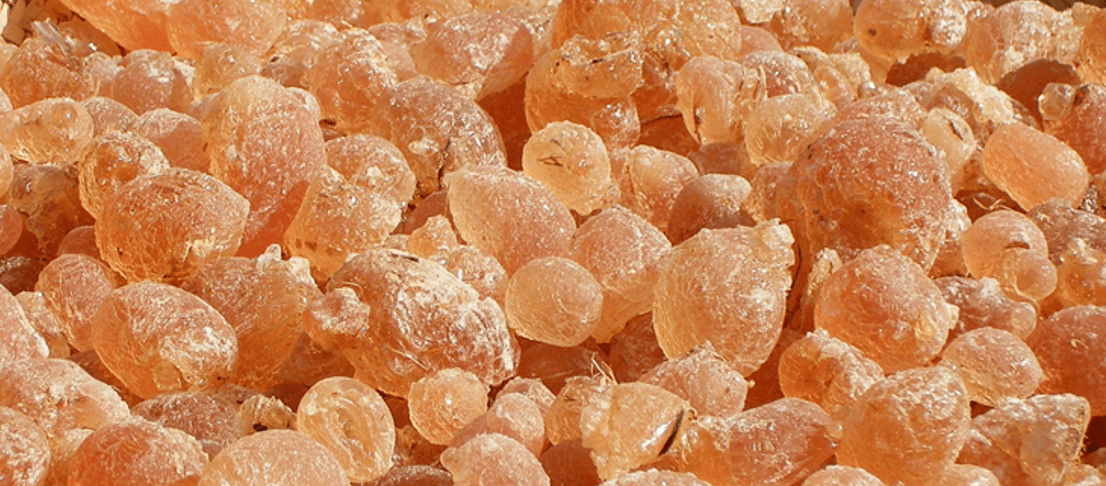
Guess the weird and wonderful uses of acacia gum!
Acacia gum (otherwise known as gum arabic or E414) is a 100% natural product extracted through a tapping process from acacia trees, predominantly in the South Sahel in Africa. It is completely allergen- and GMO-free, and is used in thousands of products across a number of different industries such as the food, pharmaceutical and cosmetics industries.
Aside from its standard use as a food hydrocolloid, texture improver and gelling agent, acacia gum has many unexpected and unusual applications both across the continents and across the ages…
The Queen of England’s lipstick
Did you know that acacia gum once featured in the royal lipstick of choice? During the 16th century in Britain, bright red lips were in vogue, and according to historical reports, Queen Elizabeth I was a huge fan! The queen’s favourite lipstick apparently contained a mixture of acacia gum, egg white and fig milk. What’s more, thousands of years beforehand in Ancient Egypt, Cleopatra herself was also reported to have used cosmetics which contained the gum!
Art attack
Nowadays, acacia gum is predominantly used in Asian countries to produce creative and meaningful artwork. For example, in China, Buddhist monks rely on a mixture of gum arabic and chalk to produce traditional paintings on silk called ‘Thangka’, which are used in religious ceremonies in honour of Buddha. In India, the gum is also used in the exact same way to produce Kinnala art, comprised of wooden sculptures. Moreover, thanks to its natural properties, acacia gum is often used as an essential binder in watercolour paints and calligraphy inks.
Monkeying around at the zoo
Funnily enough, acacia gum has also been used to keep bored zoo animals occupied! In Southwick Zoo, England, zookeepers have fashioned toys filled with acacia gum to give to the enclosed monkeys and lemurs to keep them amused during the long visiting hours. According to Lauren Cully, the zoo’s Educational Co-ordinator, “Rewarding activities are important to stimulate these smart animals so that they remain happy and maintain their skills from the wild.”
The elixir of youth: anti-wrinkle cream
Aside from make-up and hair products, acacia gum can even be found in popular cosmetics such as anti-ageing face creams! According to Simon Ford from the organic cosmetics group, Melvita: “Acacia gum provides an instantaneous ‘lifting’ effect and improves the texture of skin, smoothing over wrinkles and leaving the skin soft and supple. Acacia gum even supports natural fibres such as collagen and elastin.”
Hush little baby…
The secret to soothing screaming babies may simply be… acacia gum! According to the popular French blog for new parents, mamanrenardetpapaours.com, a mixture of acacia gum with syrup, orange blossom water and mineral water is the best way to relieve infants suffering from colic and allows parents to enjoy a peaceful night’s sleep!
As you can see, thanks to its versatile nature, acacia gum has a wide range of weird and wonderful applications, making it the perfect 100% natural additive to satisfy all your needs!