Alland & Robert, a family success story
Alland & Robert, a familly success story
Founded in 1884, Alland & Robert has seen five generations of visionary leaders build the company’s reputation and expertise in the international acacia gum market. From Francisque to Frédéric Alland, the company has been transformed from a humble family business story to a major undisputed forerunner in the natural gums industry, exporting to 69 countries on all continents.
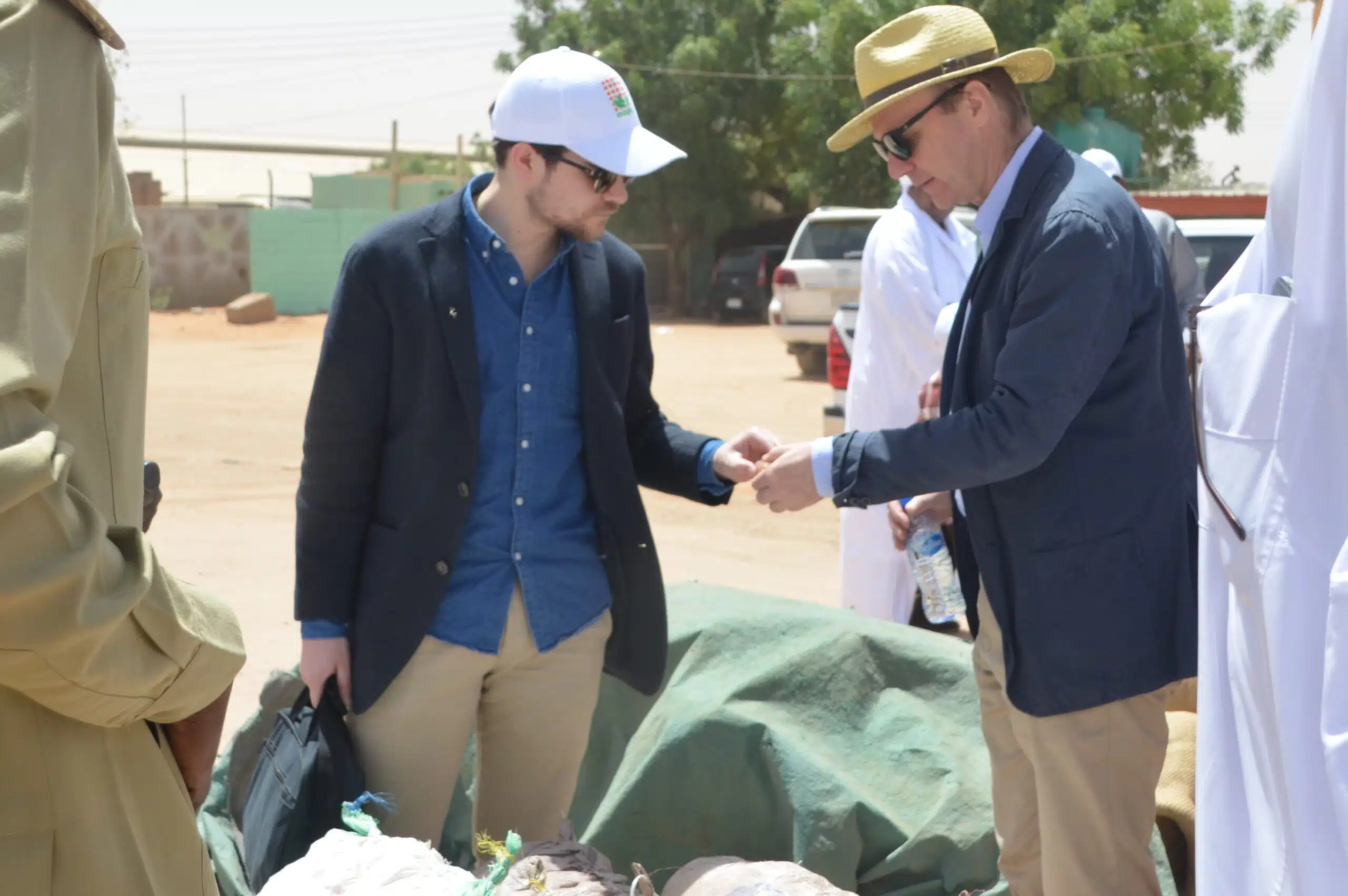
Recently named as Deputy General Director, 25-year-old Charles Alland is about to take over the family business. We managed to interview Charles about his vision of the acacia gum market before he headed off to Sudan to meet with our suppliers and symbolically plant a tree to mark National Tree Day.
The company has been passed down through five generations and has 134 years of expertise in acacia gum as well as other natural gums. Charles Alland, can you tell us a little bit about yourself and your family’s business tradition?
The family business was created in Paris by Francisque Alland and his partner, Alfred Robert, and they started off sourcing acacia gum in Africa to import to Europe. Over the years the company grew from strength to strength, with each generation of the family making a valuable contribution – for example, my father, Frédéric Alland, became CEO of the company in 1984. It was under his influence that Alland & Robert became widely-known on an international level. It was thanks to these visionary leaders that the business has been shaped into what it is today: a global leader in natural ingredients which now exports all over the world.
As a child I had the chance to travel to Africa many times, especially Senegal, and discovered African culture, and most importantly, its agriculture! Here I learned about Acacia trees and how they have been cultivated in Africa for thousands of years. Walking around the bush was a great way to learn about the different species of Acacias which not only look different, but also produce different types of gum!
You are in Sudan this week to meet the suppliers. What is your take on the region and the overall impact the acacia gum industry has on it?
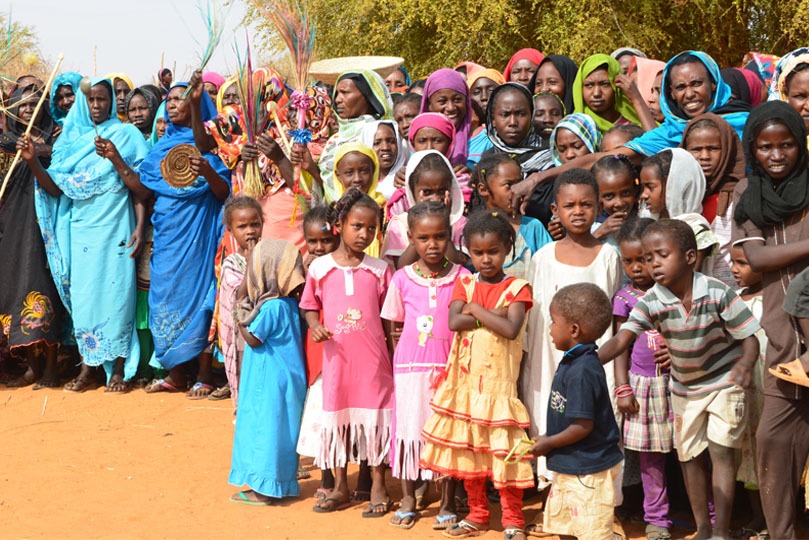
Acacia gum production is a very important economic resource for the underprivileged populations of the Sahel and Sub-Saharan Africa, which includes Sudan. In fact, around 10 million people live directly or indirectly thanks to its production. Alland & Robert works with African populations through a range of local suppliers to help improve their working and living conditions, giving them the chance to participate in training courses, enabling access to drinking water, and providing medical care for all workers.
Through its African partners, the company is also heavily involved in providing employment and training for local women who do not have the same access to education and jobs. We have several new CSR projects in the pipeline for Sudan next year, where we will not just train the farmers to harvest acacia gum more sustainably, but also ensure they have access to vital natural resources.
For the past few years, additives have been in the spotlight – and not for the best of reasons – and consumers are becoming increasingly cautious of the products they buy. Studies show that acacia gum is one of the most natural additives available to consumers, yet very few people have heard of it. Could you tell us a bit more on what acacia gum is all about?
Acacia gum is a truly versatile product which is used in a wide variety of products, including food, beverages, cosmetics and pharmaceuticals. In fact, it is used in almost all industries! At Alland & Robert, we are convinced that acacia gum has many more undiscovered properties, particularly in terms of nutrition and health foods. Since 2012, the company has invested €400,000 in various equipment to compare different natural gums which are made of complex polysaccharide polymers.
Our researchers at the IATE and UMR laboratories carry out primary research and develop new applications in collaboration with the University of Montpellier, which has a research unit especially for agro-polymers and emerging technologies. What’s more, our new laboratory in Normandy now has an application research section where we have started to test different recipes containing acacia gum (such as drinks, sauces, pastries, etc.). The lab is a new tool to broaden our knowledge, but most importantly, to help our technical assistance team find solutions for customer issues.
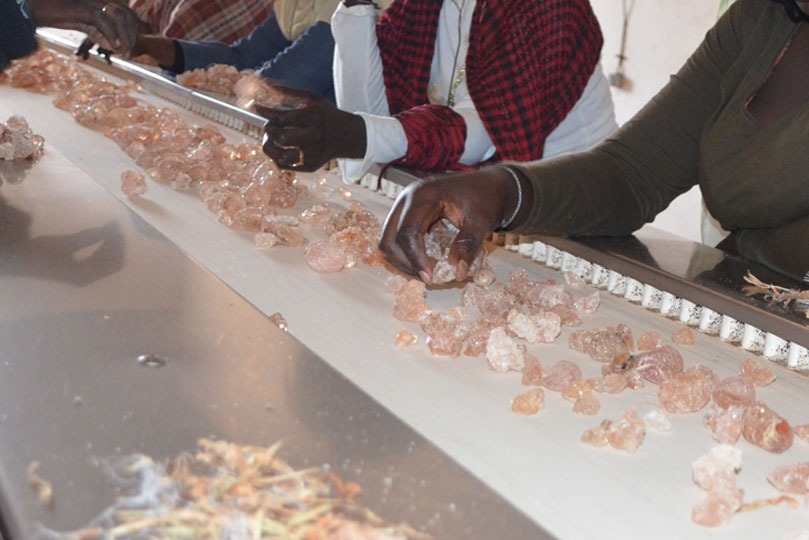
Here are some photos of the trip!

Acacia Gum, The Sahel Gold
Acacia Gum, The Sahel Gold
Despite the common misconception that Africa solely consists of dry land, the African continent contains many resources with a lot of potential – one of them being acacia gum. Given that it is both present in everyday life and part of Africa’s ‘green revolution’ to transform its weaknesses into strengths, acacia gum plays an important social, economic and environmental role in the Southern Sahel countries.
Where can we find Acacia Gum?
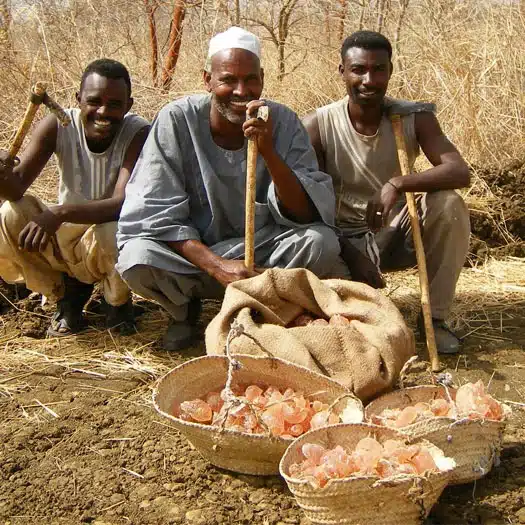
Acacia gum has been used for medicinal, cosmetic and edible purposes for 4 millenniums and is now found throughout much of the African territory. It is produced throughout the ‘gum belt’, which extends from Senegal to Eritrea, in dry and semi-arid areas in the south of the Sahara. In fact, 95% of acacia gum was exported from Sudan, Chad and Nigeria in 2012. Acacia gum is also produced in Senegal, Cameroon, Mauritania, Mali, Niger, Uganda, Burkina Faso, Kenya and Tanzania.
A tremendous economic resource
As well as the geographic significance of acacia gum, it is also a tremendous economic resource for poor communities living in the Sahel and sub-Saharan Africa. Here, around three million people can carry out their daily lives thanks to the acacia gum crop as it makes up a large part of the farmers’ incomes, particularly those in Sahelian areas. The acacia gum crop is brought directly to farmers and the merchant takes it directly to the market, therefore introducing vital assets into the economy and directly reinvesting the money into the market. Furthermore, the acacia gum crop gives local communities reassurance by deterring illegal organisations, whose primary motivation is the low rate of employment and income.
A very positive impact on the environment
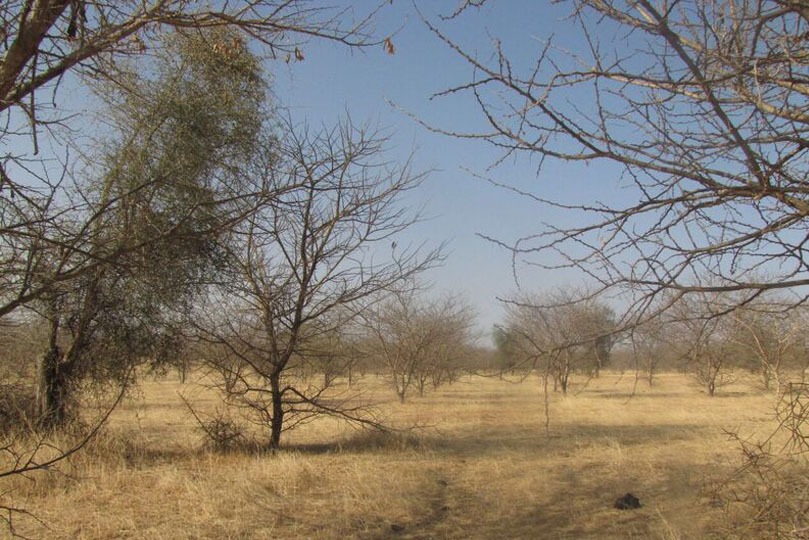
The development of the production of acacia gum is highly recommended to stop depopulation and poverty, which are closely linked, as poverty forces people to cut down trees in order to sell wood on the market, in the hope of earning enough money to survive. The main solution is to diversify economic resources by being aware of and capitalising on the potential of the local farming that can cope with arid climatic conditions. Acacia trees prevent desertification by nourishing and fertilising soils, and as a result, acacia gum farming is doubly beneficial because it both generates an income for the farmer and aids growth for other crops.