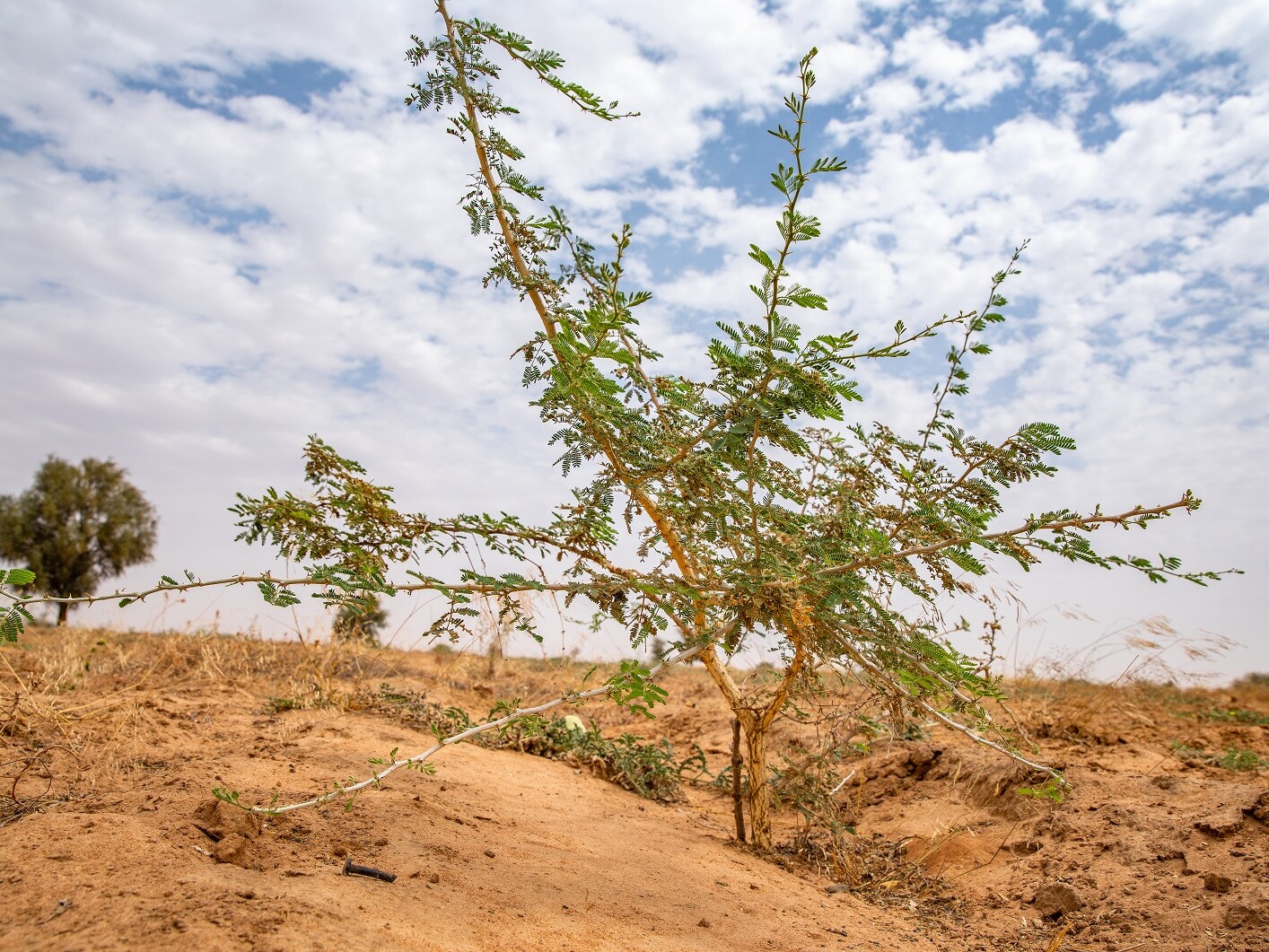
What is acacia gum ?
Acacia gum is a natural exudate of 2 varieties of acacias (seyal and senegal). It is also known by the historical name of “gum arabic”, or “acacia fiber”. It is neither resin nor sap, it is secreted by the tree after an incision has been made on its trunk or branches. As it dries, the exudate solidifies and becomes a nodule that can be harvested.
Acacia gum has been used for many centuries in cooking and for its many virtues. In addition to being completely natural and being a fiber, it offers many benefits and makes it easy to improve cooking recipes by providing binder, texture, softness and fiber with a prebiotic effect!

The gum used in our product is the best quality of acacia gum: the senegal variety which is the most efficient for all types of uses.
What is acacia gum ?
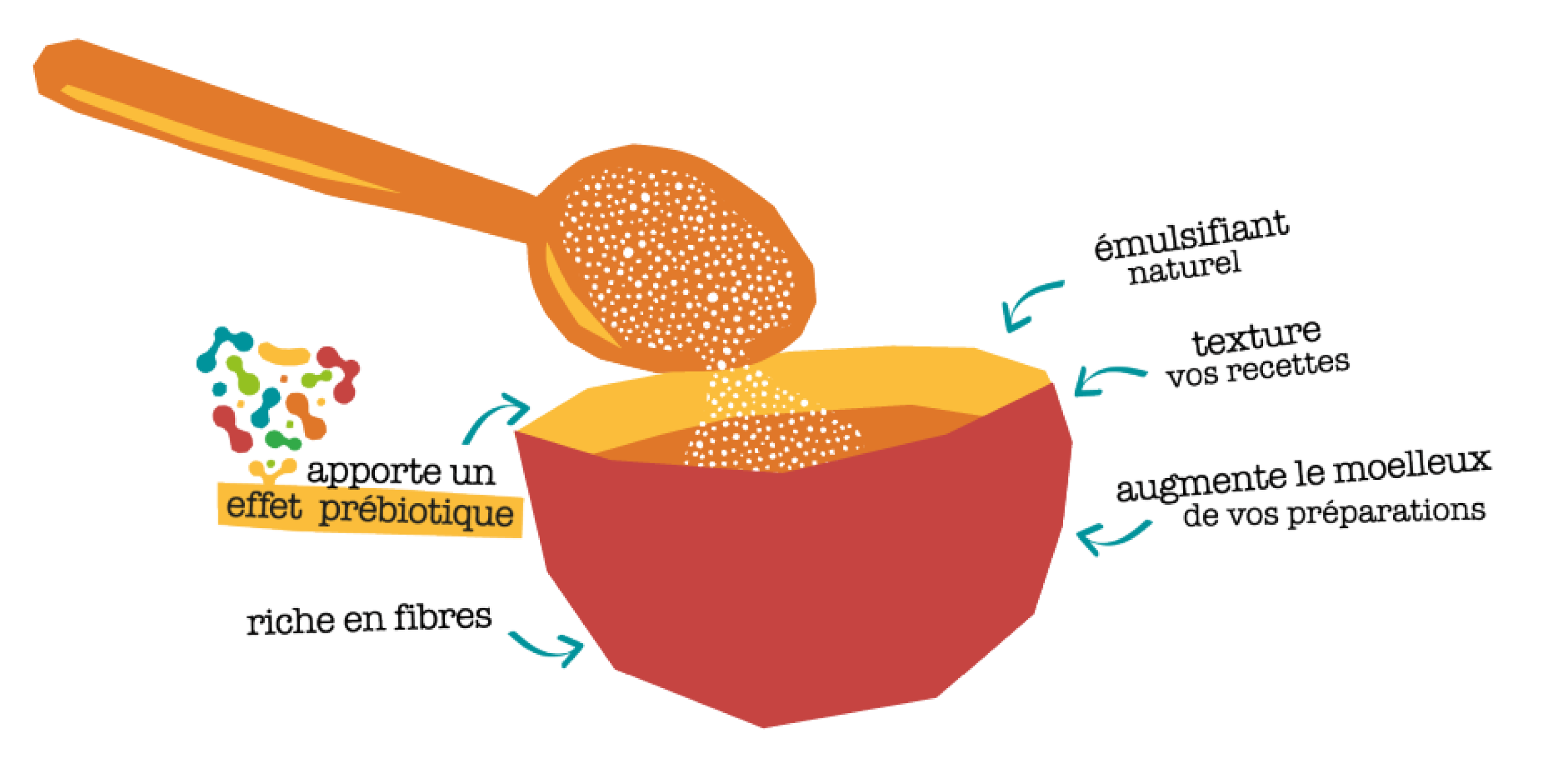
A natural emulsifier
Acacia gum makes it possible to perfectly mix together and homogenize liquids such as oil and water, which is particularly practical for the preparation of drinks, smoothies, salad dressings and other liquid preparations.
Texturing agent
Acacia gum improves the texture of preparations, in particular thanks to its water retention properties. It improves the appearance, taste and volume of recipes, and depending on the preparations, their softness or crispiness.
Prebiotic fiber
Acacia gum provides dietary fiber content: it improves intestinal transit and helps regulate insulin levels in the blood. The prebiotic effect of the gum strengthens the good bacteria present in the intestine and their beneficial action on human health.


Our recipes
 30 min
 Hard
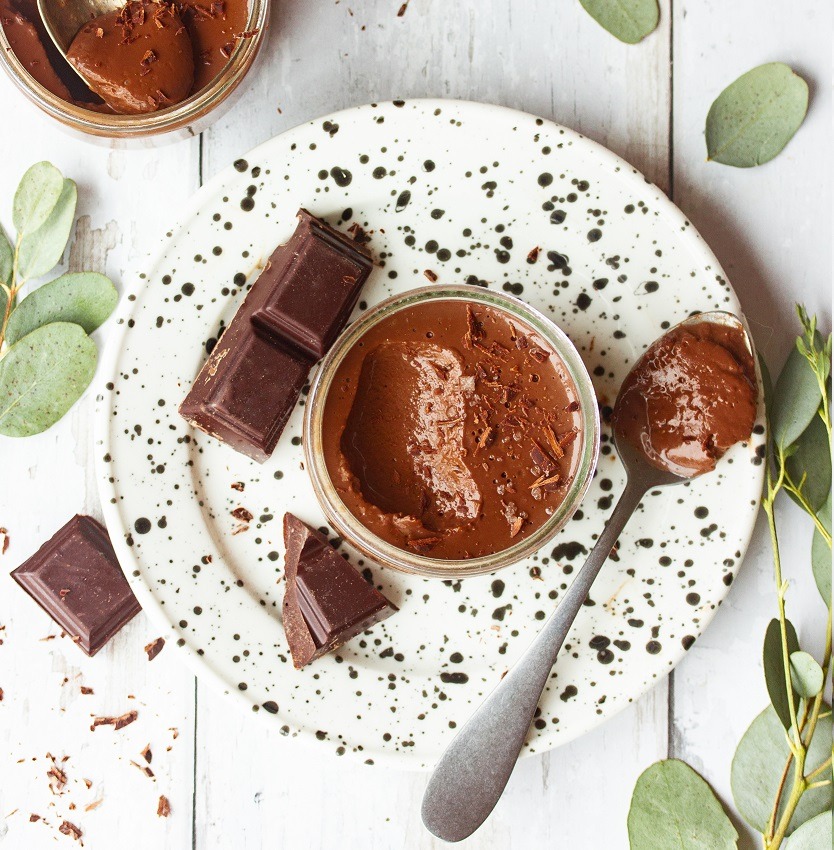
Crème au chocolat vegan
30 min Hard
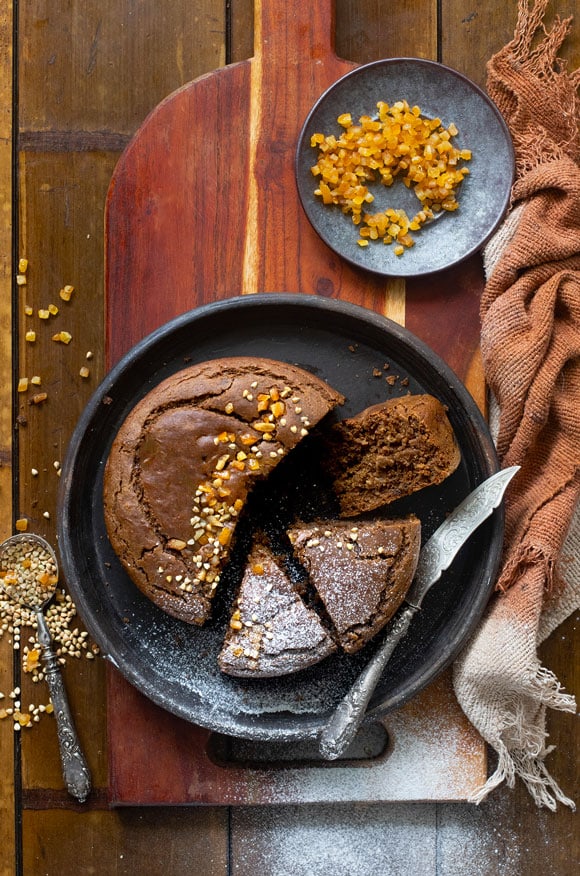
Gluten-free orange cake
18 min Easy
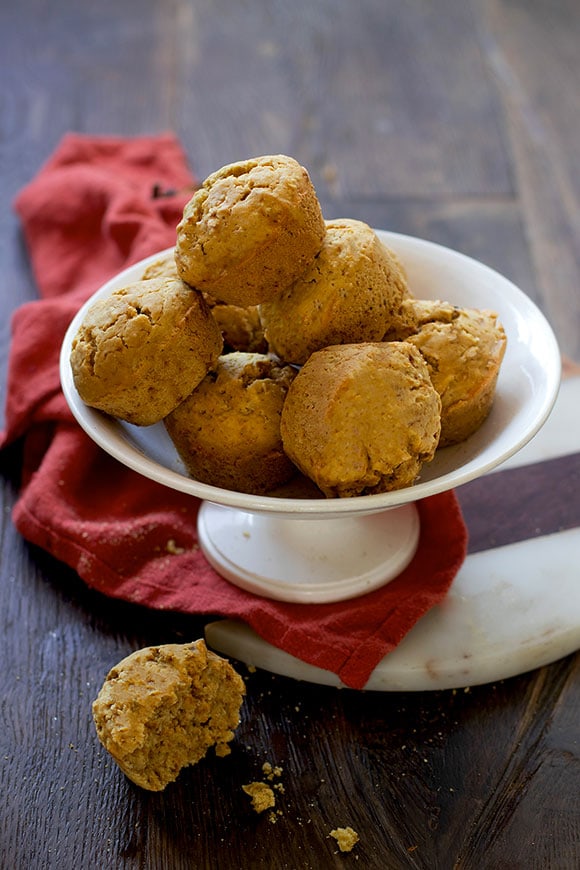
Gluten-free coco muffins
5 min Easy
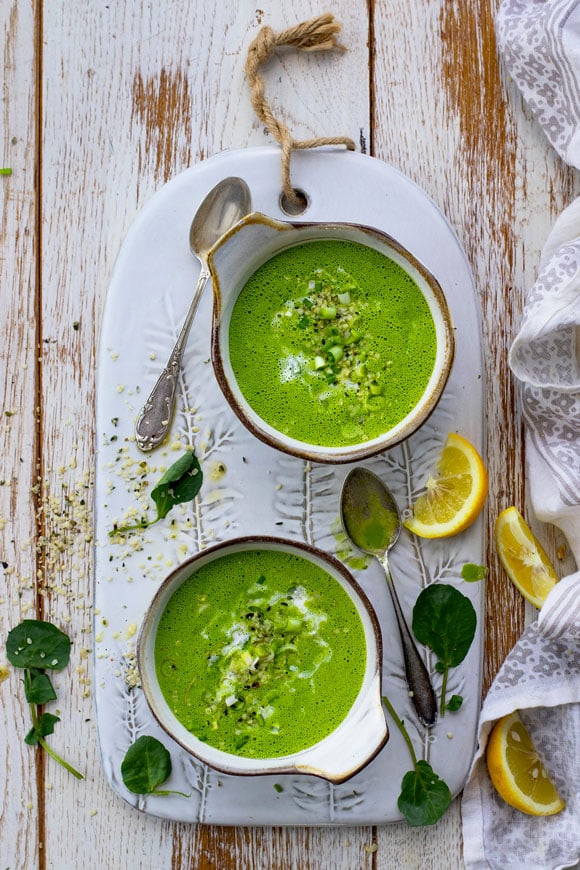
Watercress and almond soup
FAQ about our acacia gum
Acacia gum enhances moistness, mouthfeel and texture in cakes, breads, sauces and soups, and improves the mixing of water and oil in vinaigrettes and smoothies.
- Gluten-free: balances dry and flaky textures, and helps increase volume
- Baked goods: retains humidity and extends freshness
- Drinks and yoghurts: cold-dissolving for daily fibre intake
In home cooking, acacia gum is used in small quantities – usually between 1 and 6% of the volume by weight. At this ratio, it improves texture without weighing down the mixture.
- As a fibre supplement: diluted in water, other drinks or yoghurts
- To start off: 1 teaspoon, then adjust to obtain the desired result
- Unlike xanthan gum, it does not form a gel or create a gluey texture
No; one of the major advantages of acacia gum is that it is flavourless, odourless and colourless. It will not change or impair the flavour of your dishes, whether they are sweet or savoury.
- No botanical aromas, unlike psyllium or flax seed
- No sugar or fat: less than 2 kcal per gram
- The only noticeable effect is a softer or smoother texture
To a certain extent, yes. Owing to its binding and texturing properties, acacia gum enhances the crumb and texture of baked goods, but it cannot completely replace the properties of egg (such as its rising effect) or the gelling properties of gelatine.
- Cakes: can partly replace the use of eggs for binding and moistness
- Mousses and puddings: the gum cannot make a mixture set on its own
- The answer depends on the recipe: Alland & Robert shares lots of recipes on Instagram and on its website, such as this vegan chocolate pudding
Yes. Acacia gum is a prebiotic soluble fibre that improves digestive transit and feeds good bacteria in the microbiome. Its slow fermentation in the gut makes it a high-tolerance ingredient.
- Alland & Robert 2021 consumer study: improved overall digestive comfort
- Recognised as a source of dietary fibre by the FDA since September 2021
- Helps reduce blood sugar spikes after carb-heavy meals
Find out more at acacia gum and gut health.
Yes on all three points. Naturally gluten-free and 100% vegan, acacia gum is a tree exudate that does not contain any major allergens. Certified as FODMAP-friendly, it is suitable for individuals suffering from irritable bowel syndrome and those following low-FODMAP diets.
- Low in fermentable sugars responsible for digestive discomfort.
- Suitable for vegan, keto and gluten-free diets.
- Detailed reference information can be found on our certifications page
1 teaspoonful equates to around 5 grams of acacia gum. As the gum contains 90% fibre, this means that a teaspoonful provides 4.5 grams of fibre, or around 15% of the recommended daily dose in France (30 grams).
- Two teaspoonfuls covers almost a third of a person’s daily needs, while the average consumption of fibre in France plateaus at around 20g
- Its slow fermentation allows you to increase the dose without bloating
- A 150g sachet will last around 1 month, based on 1 teaspoonful per day
Acacia gum and gum arabic are two different names for the same product. Acacia fibre is an acacia gum for which Alland & Robert guarantees a minimum of 90% prebiotic soluble fibre.
- “Gum arabic” is the historic name, inherited from the ports in Arab countries from which African gums were shipped
- “Acacia gum” is the botanical name, referring to the acacia senegal and acacia seyal species that grow in the Sahel
- E414 on a food label: indicates the same ingredient
Acacia gum stands apart for its textural and binding properties, as well as the health benefits of its fibre content. Unlike guar gum, which slows down digestion (making you feel full), or psyllium, which can cause bloating in high doses, acacia offers slower fermentation with recognised prebiotic benefits.
- Psyllium: forms a gel with a gelatinous texture and botanical flavour
- Guar: thickens significantly in low doses, making it difficult to measure for cooking
- Acacia: fluid even at in high doses, flavour-neutral, 90% soluble fibre
Acacia can serve a variety of culinary purposes with no impact on digestive tolerance.
Stored in a properly sealed doypack away from heat, light and humidity, the gum will keep for at least 3 years. The shelf life date is indicated on the packet.
- A dry good that does not contain water or fat, and will not turn rancid
- The only risk is humidity, which can cause the powder to clump: be sure to close the seal after each use.
- Once diluted, consume on the same day.
The senegal variety, which is higher quality and has stronger functional properties, available in an organic powder in a 150g doypack pouch.
- Improved binding and emulsifying properties for everyday culinary use
- Certified organic, as well as gluten-free, vegan, halal and kosher
- Made in Normandy from gums harvested in the Sahel: the same quality product supplied to manufacturers since 1884
We're in the news



Alland & Robert commitments
Since 1884, Alland & Robert has been the specialist and world’s leading manufacturer of natural gums and tree exudates. We are particularly expert in acacia gum, which we manufacture with the highest quality in our factories in Normandy. Acacia gum is harvested in the Sahel in Africa, which is why we work with our local suppliers to develop a sustainable and ethical industry.
We are committed to local communities and support projects in several countries, notably through our Corporate Foundation. Acacia gum is good for the Sahelian environment! The acacias on which it is harvested prevent the desertification of African lands, restore soil fertility and have a beneficial impact on global warming. This is also the reason why many acacias are planted as part of the international reforestation project “The Great Green Wall”.