

A year of partnership with TREE AID to plant acacia trees!
We help plant trees since January 2020. Here is a summary of our achievements over the last year.
Growing the Great Green Wall
The Great Green Wall is an African-led initiative whose ambition is to grow a wide belt of trees, vegetation and fertile land across the Sahel. This ambitious project represents an 8,000km band of trees but is also so much more than that! It is providing food and jobs to the millions of people living in the Sahel, and bringing Africa’s degraded lands back to life.
How is Alland & Robert helping?
The projects we support are part of the Great Green Wall movement. As native species perfectly adapted to the desert, acacia trees are one of the main trees planted as part of the Great Green Wall.

Reducing poverty in Mali
The Koulikoro region of Mali lost 86% of its forests to deforestation in 10 years. Most of the trees were cut down to make rooms for farms. In addition, the climate crisis is making the environment hotter and rainfall more unpredictable. People struggle to grow enough crops to feed their family or sell to make a living.
How is Alland & Robert helping?
Alland & Robert supports a project aiming to train over 400 farmers to grow and protect trees, and restore degraded lands. Women’s group are supported to makefuel-saving stoves that use half the firewood usually used in traditional stoves, which reduces the amount of trees being cut down. 2 tree nurseries have been set up and they have produced over 19,000 trees. Since 2017, Tree Aid have been working on restoring Koulikoro and they have recorded a 34% decrease in poverty in the households they are working with.
Establishing effective community forest governance in Niger
In Park W, Alland & Robert supports a project aiming to help over 250 families to develop businesses based on tree products, including acacia gum. Another objective of the project is to train people to look after forest resources and manage their land sustainably.
How is Alland & Robert helping?
A member of Tree Aid in Niger said about acacias Senegal, one of the acacia variety producing acacia gum: “It is drought resistant and adapts to completely degraded areas, in addition it produces gum arabic for the communities and the seeds are in great demand. It is also a fodder and leguminous species that enriches the soil.”
Supporting ecosystems and communities in Ethiopia
In Ethiopia, over 90,000 hectares of forests are being cut down every year. As a result, huge areas of land are no longer able to support plant life, and farming is becoming impossible. In the Central Rift Valley, eroded soil then flows down the Meki River into the nearby Lake Ziway, causing it to dry up as it fills with silt.
How is Alland & Robert helping?
Alland & Robert supports a project in Dugda-Meki that helps people to restore their local environment, build sustainable businesses and grow nutritious food. In partnership with Tree Aid, we help regenerate degraded land so that it can provide communities with food and incomes, helping them to thrive. Local people are growing trees and learning soil and water conservation methods that will help them restore the land and trees for years to come.


Acacia gum and gut health
A study confirms the positive impact of acacia gum on gut health and digestive wellness.
In recent years, the gastrointestinal (GI) system has been linked to numerous aspects of health. Many consumers today know that a happy, healthy gut is key for overall wellbeing. There is significant demand for food, beverage and dietary supplement with digestive health advantages.
Alland & Robert decided to research to role acacia gum can play in gut health. Our objective: evaluate the impact of acacia gum on consumers who suffer from intestinal disorders regularly, and provide scientific data that support the use of acacia gum as a gut health agent.
Alland & Robert shares the results of this exclusive study in a technical paper designed for formulators looking for gut health friendly ingredients.
Complete the form. You will receive the technical paper by email.
(You may not receive it immediatly, it may take a little while)
[weforms id=”3988″]
Alland & Robert may use your contact data to keep you informed of its products and services by email or by phone. You can withdraw your marketing consent at any time by clicking the unsubscribe link in such email or by sending an email to info@allandetrobert.fr.
More information on our processing can be found in our Privacy Notice. By submitting this form, you acknowledge that you have read and understand our Privacy Notice.
Corporate Responsibility Report 2020
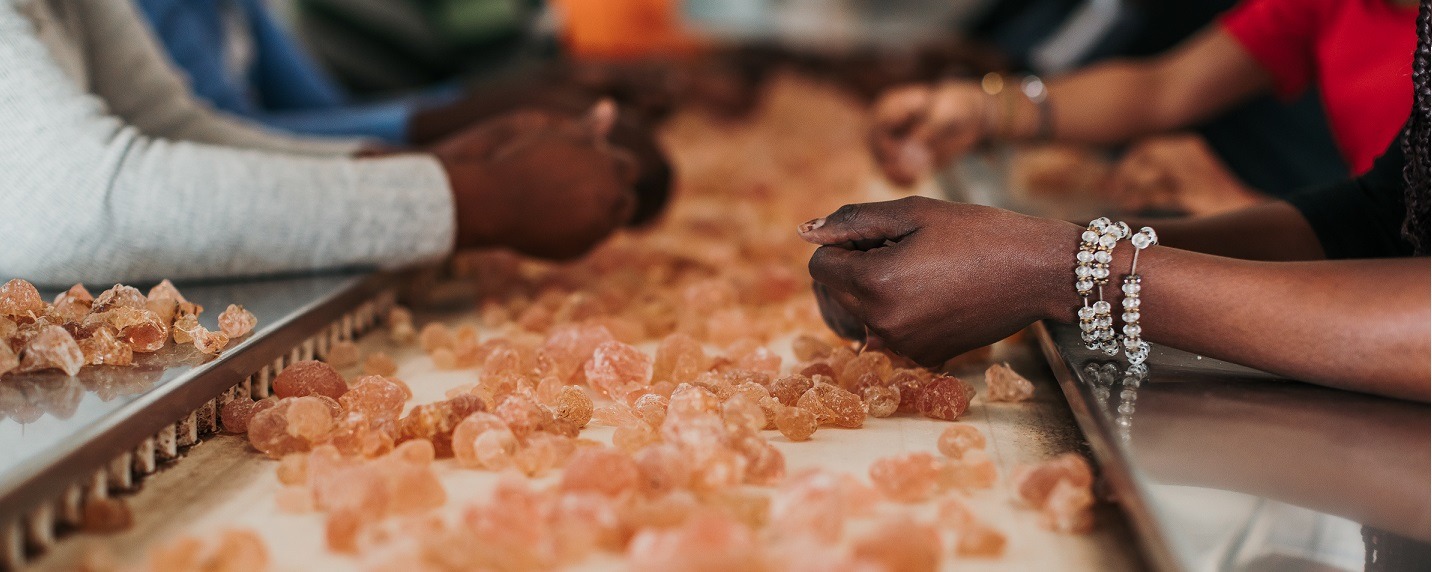
REPORT DOWNLOAD: Our 2020 Corporate Responsibility Report is out!
Alland & Robert works hard to be sustainable and provide our customers, clients and final consumers with natural, organic and ethic ingredients. We are strongly rooted in the Sahel where we support our suppliers, and all communities working in the Acacia and Karaya gum industries.
Our Corporate Responsibility Report is a summary of all our actions and initiatives towards sustainability. We hope it will excite and educate you on the world of natural gums!
Contact us to receive our Corporate responsibility Report 2020!
[weforms id=”2678″]
Alland & Robert may use your contact data to keep you informed of its products and services by email or by phone. You can withdraw your marketing consent at any time by clicking the unsubscribe link in such email or by sending an email to info@allandetrobert.fr.
More information on our processing can be found in our Privacy Notice. By submitting this form, you acknowledge that you have read and understand our Privacy Notice.
Acacia gum benefits in breads
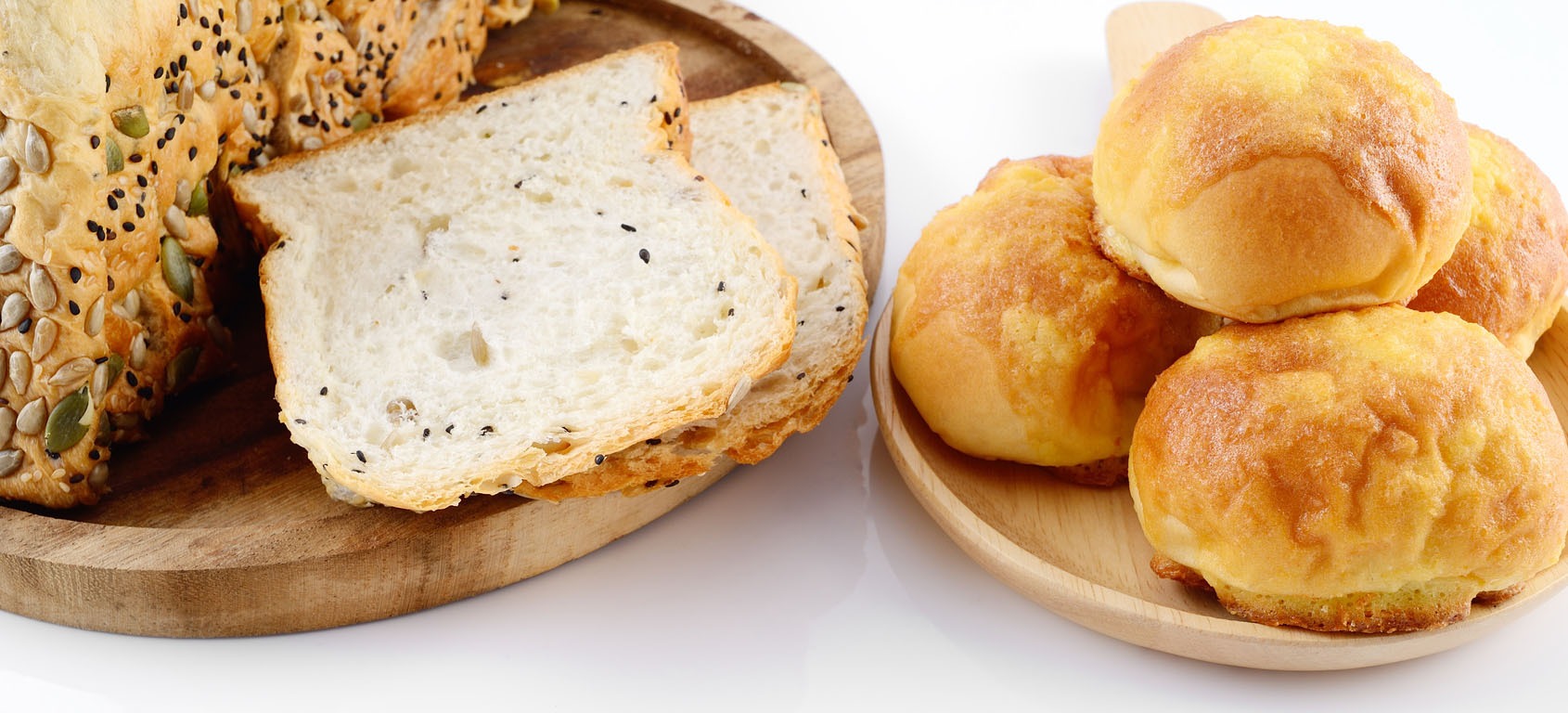
Did you know that acacia gum is already used in bread products worldwide?
Alland & Robert collaborated with LEMPA (Laboratory for the testing of food products) to carry out a study evaluating acacia gum’s impact on bread (in terms of texture, water retention and preservation) as well as a sensory evaluation. Using two types of acacia gum (Acacia Gum Seyal and Acacia Gum Senegal) and two types of bread (white sandwich bread and gluten free bread), they discovered that adding acacia gum to bread improves texture and preservation, enhances taste and adds soluble fibre!
Download our documentation about the benefits of acacia gum in breads!
[weforms id=”2642″]
Alland & Robert may use your contact data to keep you informed of its products and services by email or by phone. You can withdraw your marketing consent at any time by clicking the unsubscribe link in such email or by sending an email to info@allandetrobert.fr.
More information on our processing can be found in our Privacy Notice. By submitting this form, you acknowledge that you have read and understand our Privacy Notice.

Acacia gum and sugar reduction
Acacia gum is a versatile ingredient for sugar-reduced and sugar-free food and drinks!
In the food and beverages industry, reducing or eliminating sugar content is a necessity in order to address the health issues faced by the world population. In order to find solutions, the food industry can count on acacia gum, a natural additive and ingredient sourced from the Acacia tree.
Complete the form. You will receive the documentation by email.
(You may not receive it immediatly, it may take a little while)
[weforms id=”2604″]
Alland & Robert may use your contact data to keep you informed of its products and services by email or by phone. You can withdraw your marketing consent at any time by clicking the unsubscribe link in such email or by sending an email to info@allandetrobert.fr.
More information on our processing can be found in our Privacy Notice. By submitting this form, you acknowledge that you have read and understand our Privacy Notice.
Not all E-Numbers are bad
Not all E-Numbers are bad
Contrary to popular belief (and what we’ve been told by our parents for years), not all E-numbers are bad for you. In fact, it might even shock you to learn that certain E-numbers can actually have many advantages. A really good example of the benefit that they can bring is highlighted in the example of Acacia gum, or rather, E414.
As an E-Number, E414 is verified as a safe food additive by EFSA (European Food Safety Authority) and is also one of the 45 currently allowed in organic foods as well. This is mainly because it is seen as an essential food additive, thanks to its industry leading binding and emulsifying properties. Despite its inclusion on this list for these properties listed above, Acacia gum is also great for many different reasons.
The first of these is its richness in soluble fibre. Fibre is one of the most critical requirements for the maintenance of a smooth-functioning digestive system, without which the body is likely to suffer greatly. However, a higher intake in soluble fibre, like the one present in Acacia gum, has also been closely linked with lowering cholesterol levels, keeping blood sugar levels in order, protecting against diabetes and controlling hunger during weight loss by helping you keep fuller for longer.
E414 is also popular in the food sector because of its water retention properties, especially in the world of bakery products. For example, in breads, Acacia gum is widely added to improve their softness, especially when added to gluten free bread that is often dense and close textured. Acacia gum’s texturing properties are also used in confectionery to create syrup-like textures.
Finally, Acacia gum is also a 100% natural and allergen-free product, that can only be acquired by harvesting it from trees that are mainly located in the south Sahel region in Africa. This may seem shocking because some E-numbers are related with being produced artificially in a lab, but not E414!
From start to finish in the production process, Alland & Robert uses industry leading research and development to protect the integrity of the gum insuring the best quality, most natural, product.
To read more about our industry leading Research and Development click here!
Guess the weird and wonderful uses of acacia gum!
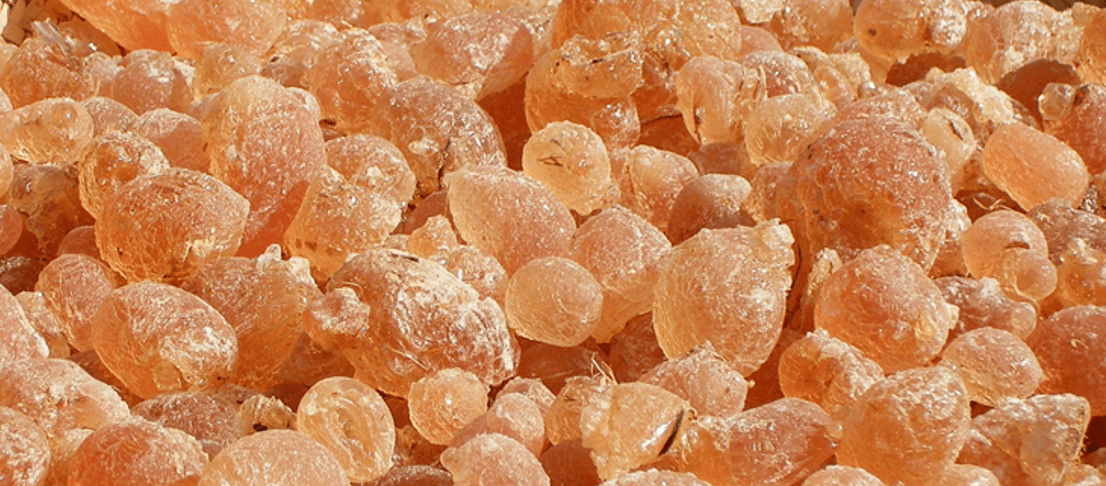
Acacia gum (otherwise known as gum arabic or E414) is a 100% natural product extracted through a tapping process from acacia trees, predominantly in the South Sahel in Africa. It is completely allergen- and GMO-free, and is used in thousands of products across a number of different industries such as the food, pharmaceutical and cosmetics industries.
Aside from its standard use as a food hydrocolloid, texture improver and gelling agent, acacia gum has many unexpected and unusual applications both across the continents and across the ages…
The Queen of England’s lipstick
Did you know that acacia gum once featured in the royal lipstick of choice? During the 16th century in Britain, bright red lips were in vogue, and according to historical reports, Queen Elizabeth I was a huge fan! The queen’s favourite lipstick apparently contained a mixture of acacia gum, egg white and fig milk. What’s more, thousands of years beforehand in Ancient Egypt, Cleopatra herself was also reported to have used cosmetics which contained the gum!
Art attack
Nowadays, acacia gum is predominantly used in Asian countries to produce creative and meaningful artwork. For example, in China, Buddhist monks rely on a mixture of gum arabic and chalk to produce traditional paintings on silk called ‘Thangka’, which are used in religious ceremonies in honour of Buddha. In India, the gum is also used in the exact same way to produce Kinnala art, comprised of wooden sculptures. Moreover, thanks to its natural properties, acacia gum is often used as an essential binder in watercolour paints and calligraphy inks.
Monkeying around at the zoo
Funnily enough, acacia gum has also been used to keep bored zoo animals occupied! In Southwick Zoo, England, zookeepers have fashioned toys filled with acacia gum to give to the enclosed monkeys and lemurs to keep them amused during the long visiting hours. According to Lauren Cully, the zoo’s Educational Co-ordinator, “Rewarding activities are important to stimulate these smart animals so that they remain happy and maintain their skills from the wild.”
The elixir of youth: anti-wrinkle cream
Aside from make-up and hair products, acacia gum can even be found in popular cosmetics such as anti-ageing face creams! According to Simon Ford from the organic cosmetics group, Melvita: “Acacia gum provides an instantaneous ‘lifting’ effect and improves the texture of skin, smoothing over wrinkles and leaving the skin soft and supple. Acacia gum even supports natural fibres such as collagen and elastin.”
Hush little baby…
The secret to soothing screaming babies may simply be… acacia gum! According to the popular French blog for new parents, mamanrenardetpapaours.com, a mixture of acacia gum with syrup, orange blossom water and mineral water is the best way to relieve infants suffering from colic and allows parents to enjoy a peaceful night’s sleep!
As you can see, thanks to its versatile nature, acacia gum has a wide range of weird and wonderful applications, making it the perfect 100% natural additive to satisfy all your needs!
Interview with Samantha Schnur from The Naughty Fork
Interview with Samantha Schnur from The Naughty Fork
To be honest, not a lot of people have heard of the all-natural, plant-based additive, acacia gum. And even if they have, not a lot of people know that it can be found almost everywhere – ranging from dairy products to baked goods, cosmetics and even dog food, its applications are endless! Acacia gum (otherwise known as gum arabic or E414) is truly versatile: colourless, odourless, and with an exceptionally low calorie count, it can be added to almost anything in order to boost fibre content or even improve product texture with no side effects at all!
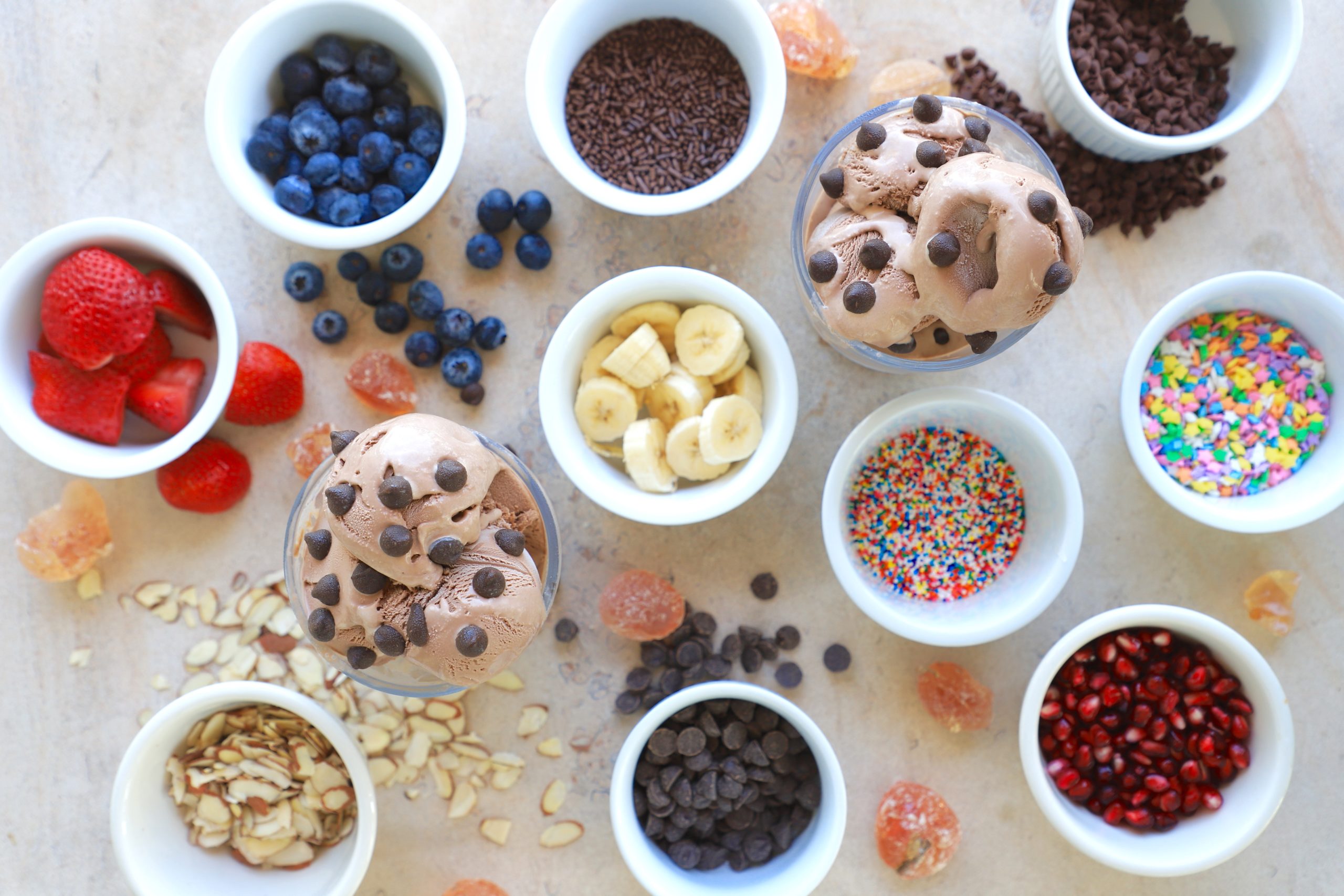
We got in touch with Samantha Schnur, who runs the food and lifestyle blog, The Naughty Fork, who produced a delicious vegan chocolate ice cream recipe containing an extra-special ingredient… (you guessed it) acacia gum! Samantha agreed to answer a couple of our questions to tell us more about her first-ever experience of using acacia gum…
Tell us a bit about yourself and your blog. When did it start? Which major food trends interest you?
I started ‘The Naughty Fork’ for fun while I was a pre-med student at Florida State University. It was a good way to let off steam from all the stress that comes with being one of the many students in the pre-med field. I began taking pictures on my phone of food that I had either ordered to my house, or went out to eat during the weekend. The account slowly started to grow, and at one point I began getting phone calls from PR companies to come in and enjoy a comped meal in exchange for a photo post.
From there, it took off. I moved back to Miami and finished my education at the University of Miami while continuing to grow ‘The Naughty Fork’. As you might be able to gather, I did not finish the Medical School route; I decided to take ‘The Naughty Fork’ on full time and it was the best decision of my life! As far as food trends go, I am a huge fan of the gluten free/vegan/smart eating trend.
I know that is far from what ‘The Naughty Fork represents’, but in a country where obesity is an issue, shedding light on the benefits of eating healthy is so important. I am also a huge animal lover, so understanding what the processes are for eating the meats that we eat and the milk we drink are important as well.
Before working with Alland & Robert, did you know that acacia gum (otherwise known as gum Arabic) is found in countless everyday products as the natural additive, E414?
I had no idea! I started reading up on it and found that I must’ve been eating it without ever knowing. My dog must be eating it too!
Tell us about your recipe and how you incorporated acacia gum into it. Which of its properties interested you the most and why?
I had never used acacia gum before, so I wasn’t entirely sure how it would perform in the recipe or how much would be needed for it to be effective. For the ice cream, it seemed to be the thickening agent. Which in ice cream terms, is the most important thing, as the recipe wouldn’t have worked as well without it! I was impressed! I think the best property of acacia gum is the natural essence of it. Like I said before, I am really interested in the health food trend and using something that is natural in recipes is always a bonus, and I’d like to incorporate it into some of my future recipes.
Check out this delicious vegan chocolate ice cream recipe made with Acacia Gum in collaboration with food and travel blog, The Naughty Fork!