5 things you need to know about Syndeo®
5 things you need to know about Syndeo®
Alland & Robert, an international leader in Acacia Gum, is launching the innovative Syndeo® range. The range is based on a blend of natural and vegetal hydrocolloids that can be used as a functional additive in food and drinks, including dairy-free beverages. With over 130 years of expertise and cutting-edge research on natural plant exudates, Alland & Robert’s new Syndeo® range will bring stabilizing and texturing properties to a wide range of food and beverage applications.
1. It’s 100% natural and sugar free
As the clean label product and natural food market is growing, food and beverage manufacturers are keen to leverage food ingredients which can meet consumers’ demands for an ethical, healthy and tasty product. Syndeo® is the perfect solution, as it is made from all natural vegetal gum exudations coming from trees. It is also a non-starch polysaccharide, GMO-free product with constant traceability, and therefore fits into this marketplace perfectly. Furthermore, it has no sugar content and thus can be used in sugar-free recipes, perfect for those with diabetes or on a low-sugar diet.

2.It’s perfect for dairy-free beverages
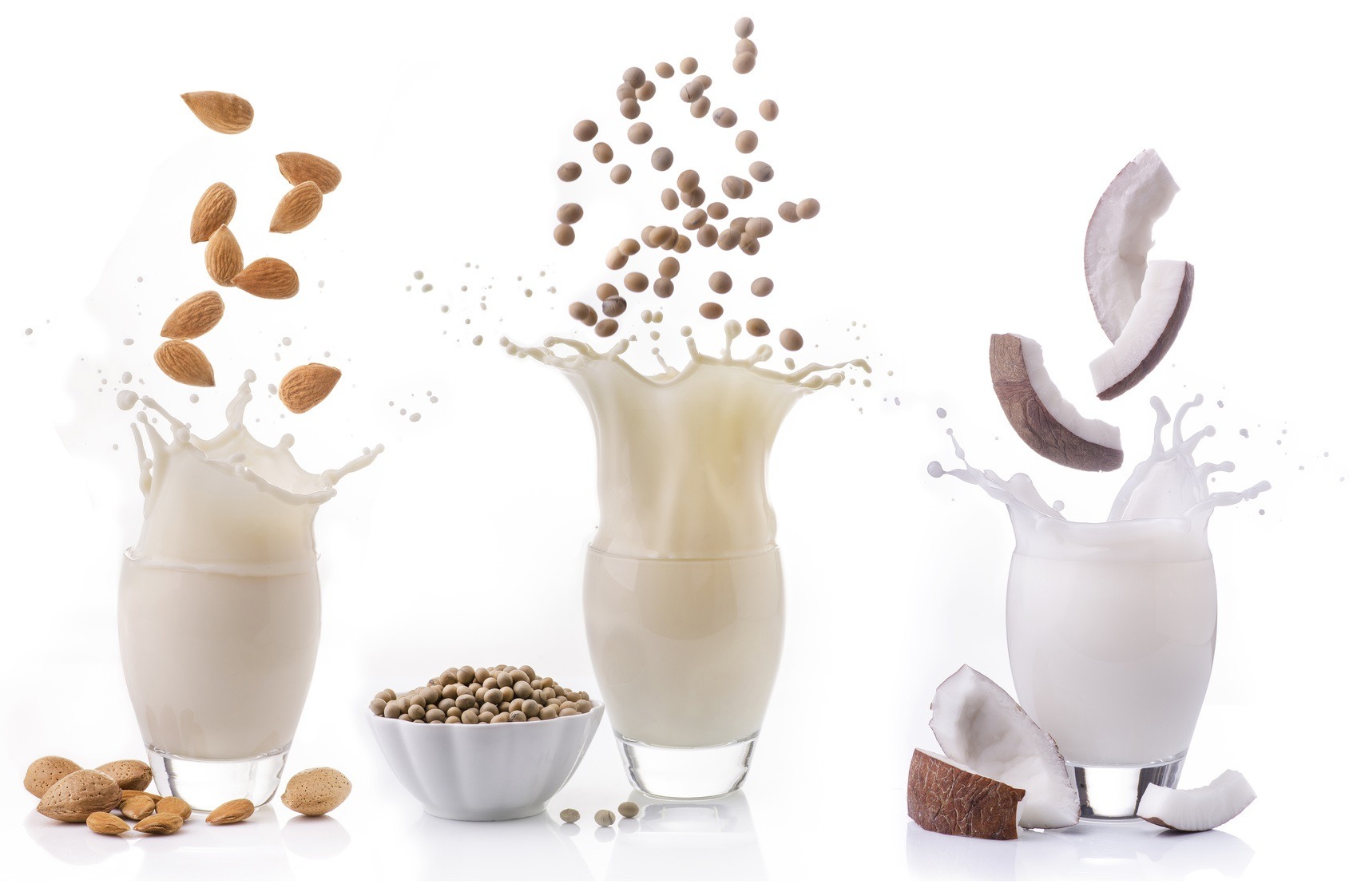
The increase in specialist diets (such as vegan, lactose-free and paleo) has led to a rise in the market for dairy-free beverages. Drinks based on soy, nut, or rice are now widely available and need to meet consumers’ expectations for texture, sensory experience, and clean label requirements. Syndeo® enhances moisture retention while bringing texture and mouthfeel improvement to vegetable-based milk substitutes. It also provides excellent particulate suspending properties which are essential for dairy-free beverages to ensure optimum taste. Great viscosity synergy has been established between Syndeo® and locust bean gum (which is a common ingredient of dairy-free drinks). Syndeo® can also be an effective replacement of gellan gum.
3. It is a natural stabiliser and texturing agent
The hydrocolloid blends combine stabilizing, thickening and emulsifying properties to create a multifunctional, efficient additive. The Syndeo range will bring high viscosity for a significant texturing effect and effective stabilisation to a wide range of food and beverages, including salad dressings, prepared meals, fillings, dietary products, desserts and ice creams.

4.It is a soluble fibre
As Syndeo® is a type of soluble fibre, it helps to lower cholesterol, control blood sugar levels and aid digestion. It’s also a healthy way to increase soluble fibre intake, as it contains no additives, preservatives or allergens. Furthermore, it is multifunctional, allowing companies to use one additive instead of two and efficient at very low dosage (less than 1%).
5. It’s temperature stable
Syndeo has excellent resistance to microwaves, freeze and thaw and is ideal for ready-to-eat meals and sauces. It has no texture modification, even at 65°C, which allows the food to retain its great taste when reheated. Syndeo® is also perfect for manufacturers, as well as consumers, as it can be dispersed at both hot and cold temperatures and is stable on a wide pH range. Therefore, it is widely used in the food and beverage industries, and is found in non-dairy beverages, ready-to-eat food, frozen foods, dietetic products, fillings, dressings and desserts.

Acacia Gum, a natural ingredient found in many common food products
Acacia Gum, an unknown natural ingredient found in many common food products
Acacia Gum is an edible vegetable exudate which comes from acacia trees. It can flow either naturally or as a result of an incision made in the branches of the tree. Not only is the product itself 100% natural and vegetal, harvesting methods are 100% natural too. Unlike the majority of products used in the food industry, Acacia Gum is harvested solely from wild trees grown without pesticides, the majority of which are located in the southern Sahel, in Africa.
Three thousand years ago, the Egyptians were already eating Acacia Gum and using it to ensure the bandages on mummies stuck fast. Today, there are a wide variety of applications: the ingredient is used in the food, pharmaceutical and cosmetic industries, as well as in technical applications.
Wine, chewing gums, yoghurts, sodas, mascara… What do these day-to-day products have in common? They contain Acacia Gum, which alone (and without any chemical modification) has many functional properties: emulsifier, texturing and film forming agent, dietary fiber, stabilizer, carrier… Acacia Gum’s natural qualities and consistency make it very popular in the food industry, and among the world’s leading food groups. They appreciate the versatility of Acacia Gum, which for them is a reliable natural ingredient. Alland & Robert supplies most major food companies worldwide, but also works closely with the pharmaceutical and cosmetics industries.
Acacia Gum is 100% natural and vegetarian, free from pesticides and GMOs. It contains no gluten and very few calories, has no odor or flavor, and is high in fiber. It is a safe ingredient, recognized as having no negative impact on health. Neither the American Food and Drug Administration (FDA) nor the Joint JEFCA (FAO/WHO Expert Committee on Food Additives) have set a maximum ADI (Acceptable Daily Intake)[1] for Acacia Gum, which is well known as a multifunctional food additive (E414). Alland & Robert also meets the European regulations on food additives and pharmacopoeia standards (European, American and Japanese) to ensure the quality of Acacia Gum.
[1] The Acceptable Daily Intake is the quantity of a substance that an average person weighing 60kg could theoretically ingest every day without any risk to health.

Acacia Gum, The Sahel Gold
Acacia Gum, The Sahel Gold
Despite the common misconception that Africa solely consists of dry land, the African continent contains many resources with a lot of potential – one of them being acacia gum. Given that it is both present in everyday life and part of Africa’s ‘green revolution’ to transform its weaknesses into strengths, acacia gum plays an important social, economic and environmental role in the Southern Sahel countries.
Where can we find Acacia Gum?
Acacia gum has been used for medicinal, cosmetic and edible purposes for 4 millenniums and is now found throughout much of the African territory. It is produced throughout the ‘gum belt’, which extends from Senegal to Eritrea, in dry and semi-arid areas in the south of the Sahara. In fact, 95% of acacia gum was exported from Sudan, Chad and Nigeria in 2012. Acacia gum is also produced in Senegal, Cameroon, Mauritania, Mali, Niger, Uganda, Burkina Faso, Kenya and Tanzania.

A tremendous economic resource
As well as the geographic significance of acacia gum, it is also a tremendous economic resource for poor communities living in the Sahel and sub-Saharan Africa. Here, around three million people can carry out their daily lives thanks to the acacia gum crop as it makes up a large part of the farmers’ incomes, particularly those in Sahelian areas. The acacia gum crop is brought directly to farmers and the merchant takes it directly to the market, therefore introducing vital assets into the economy and directly reinvesting the money into the market. Furthermore, the acacia gum crop gives local communities reassurance by deterring illegal organisations, whose primary motivation is the low rate of employment and income.

A very positive impact on the environment
The development of the production of acacia gum is highly recommended to stop depopulation and poverty, which are closely linked, as poverty forces people to cut down trees in order to sell wood on the market, in the hope of earning enough money to survive. The main solution is to diversify economic resources by being aware of and capitalising on the potential of the local farming that can cope with arid climatic conditions. Acacia trees prevent desertification by nourishing and fertilising soils, and as a result, acacia gum farming is doubly beneficial because it both generates an income for the farmer and aids growth for other crops.